Driving through Bangalore, you get used to the billboards. They’re a familiar part of the city’s landscape, a vibrant wallpaper of movie posters, flashy new smartphones, and the occasional political promise. You filter them out. But then, you see one that makes you do a double-take. Sandwiched between an ad for a new housing project and the latest Bollywood blockbuster, were two simple words: “ChatGPT.”
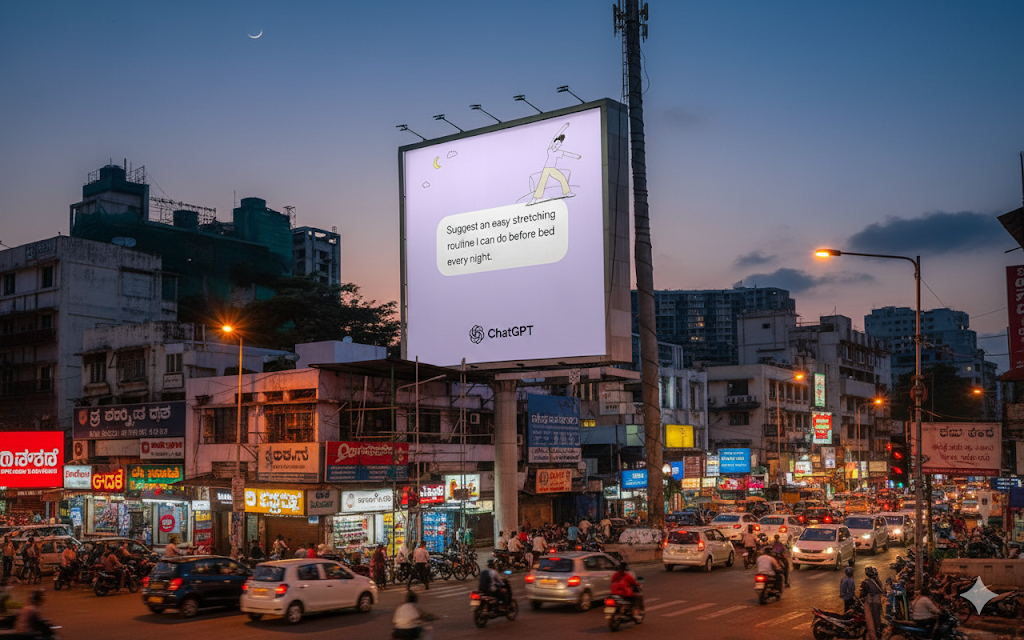
That’s new.
My first thought wasn’t just surprise. It was, “Finally. What took so long?”
For the better part of a year, AI has become as integral to my daily routine as my morning coffee. As a software developer and writer, my Gemini Pro subscription, which I’ve had for over six months now, has become my silent co-pilot. The days of getting lost in labyrinthine Stack Overflow threads or scrolling endlessly through GeeksforGeeks for a niche coding solution are fading. Now, I just ask. I describe the problem, and I get a clear, elegant solution I can adapt.
It’s not just about ChatGPT, which brilliantly kicked the door down for all of this. It’s about the entire AI ecosystem. I use these tools to write blog posts—in fact, AI was my brainstorming partner for this very article you’re reading. This isn’t just another app or a handy software update. For me, this is the single biggest technological shift I’ve experienced in my lifetime. And honestly, even with all the constant buzz, I believe AI is still massively underhyped. We’re only seeing the tip of the iceberg of its potential to aid humanity.
Why a Billboard is a Bigger Deal Than You Think
So why does a simple advertisement on a Bangalore street matter so much? Because a billboard isn’t for the niche tech crowd. It’s for everyone. And more importantly, it’s a deliberate, high-stakes move in a rapidly escalating AI arms race.
We’re not talking about small, experimental ad buys here. Recently published reports from September 2025 indicate that OpenAI has a dedicated advertising war chest for India, with estimates for its 2025 marketing spend pegged between a staggering ₹200 to ₹300 crore. This is a clear signal. A physical billboard, backed by that kind of capital, is a declaration that the battle for the mainstream Indian user has officially begun.
Historically, India has been a colossal consumer of innovative products, but we’ve often had a small base of “early adopters.” The real explosion happens when a technology crosses the chasm from the tech-savvy to the general public. We’re not just talking about tech professionals anymore; we’re talking about a fundamental shift in how businesses and individuals operate. This massive marketing spend is the investment OpenAI is making to build that bridge. It’s a calculated bet that we have passed the initial, nuanced phase of discovery and are now entering the broad, mainstream adaptive phase.
That billboard in Bangalore? It’s a tiny, localized symptom of a multi-billion-dollar global phenomenon. It signifies that the era of AI as a curiosity is over. The era of AI as a core, heavily-marketed consumer product is here. That transition, happening in just over two years since ChatGPT’s public launch, is breathtakingly fast.
The Race is On, and That’s Good for All of Us
ChatGPT may have started the revolution, but in a way, its own wild success and occasional missteps created the space for a dynamic and competitive market to flourish. Now we have incredible models from Google (Gemini), Anthropic (Claude), Grok, and countless others. This isn’t a monopoly; it’s a Cambrian explosion of innovation. This competition is pushing the technology forward at a breakneck pace, and we, the users, are the beneficiaries.
As we stand at the beginning of this adaptive phase, the conversation has to change. It’s no longer if we should use AI, but how. We need to learn how to talk to these large language models effectively, how to craft prompts that get us precisely what we need, and how to seamlessly integrate them into our daily workflows.
The questions get bigger from here. What happens when this technology becomes so capable that it disrupts every single industry? How will the very nature of work change? It’s a lot to process. But getting bogged down by fear is a non-starter. There is no on-and-off switch for this. The genie is out of the bottle.
The most important thing we can do right now is learn how to work with AI, not against it. We need to see it as a tool for augmentation, not replacement, a topic that many thought leaders are exploring. It’s about leveraging it to become more efficient, more creative, and more dominant in our respective fields. Because the competition is no longer just human.
It’s Human + AI. And that changes everything.
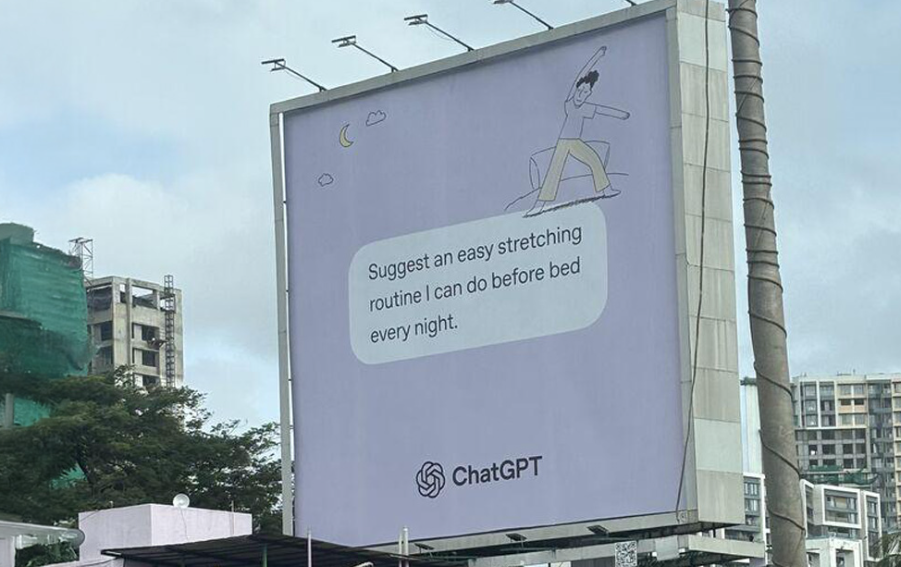
By the way, the image at the start was not real here’s the real one!
Clock’s ticking people!