Introduction
Mechanical engineering has seen significant evolution through the integration of new technology. Traditionally, engineers have progressed from basic machinery and manufacturing processes to sophisticated tools like robots, automated production lines and computer-aided design (CAD).
A transformative innovation impacting the current landscape is 3D printing.
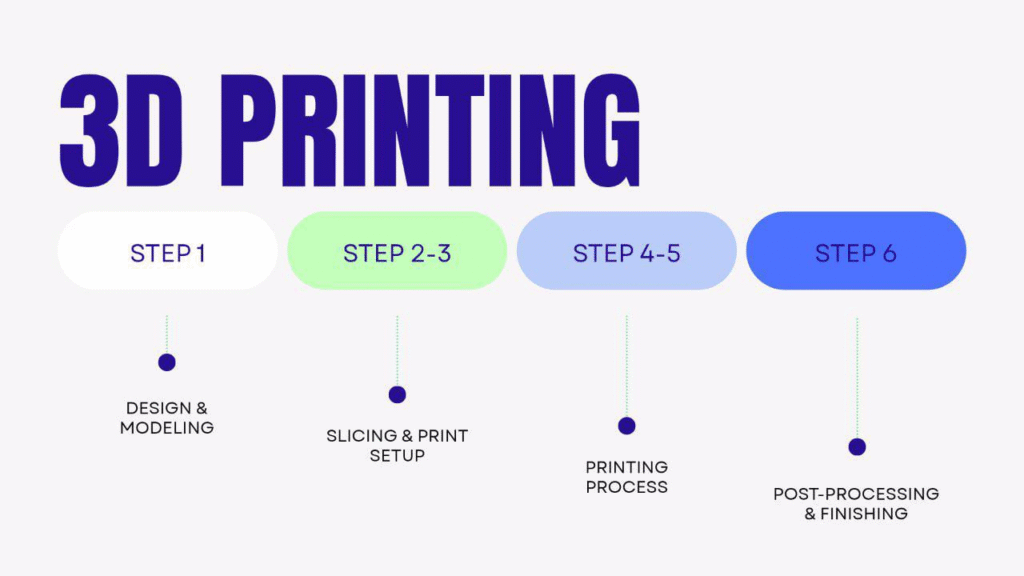
Often known as additive manufacturing, 3D printing involves building an object in layers. The engineering design is created in CAD software then sent to a 3D printer to construct the actual object. This differs from traditional manufacturing processes which usually involve material removal (cutting, carving etc.) from larger blocks.
This technique is impacting how mechanical engineers design, test and produce parts. It enables rapid prototyping, minimizes wasted material and allows for the production of intricate shapes that may be challenging or costlier to produce via conventional means.
Rapid Prototyping
Rapid prototyping is one of the significant benefits of 3D printing. Conventional methods to fabricate a prototype would typically require a few days, or even weeks of manufacturing time. For a design they would need to utilize equipment like lathes, milling machines or CNC machines.
An engineer can utilize 3D printing and develop a design for their component on a computer before producing the actual object in a relatively shorter amount of time. If the design has a fault, a new one is made in the software then printed.
If, for instance, an engineer is creating a fan blade they can first produce a printed replica to determine the size, form and how well it fits. After testing the replica the design could be tweaked prior to mass production. This not only saves a considerable amount of time and money but also the cost of producing different designs to test.
Greater Design Freedom
The designs engineers could produce used to be limited as some shapes could not be produced as they were either too complex, or too difficult for a machine. Internal parts of the design might not be reachable due to cutting tools and any complex shapes would typically require numerous different steps to produce.
3D printing allows engineers greater freedom. Curving shapes, hollow forms and structures with internal channels can be manufactured much more easily, which is a desirable trait particularly when in the aerospace and automotive fields where reducing weight is a priority.
An optimization technique called topology optimization can be applied, where software uses computer systems to ascertain the necessary material. Those materials which are not required for structural stability or any other vital purpose can be extracted. This may result in a lighter part though it must still have the appropriate rigidity.
Less Waste
Another perk to using 3D printing, is that it can greatly limit the amount of material which is discarded. With traditional methods the unnecessary material is usually sliced away from a base block. So, when a part is being fabricated, some of the material in the base block is simply discarded as scrap.
When using 3D printing you just add where you need the material, so more material is saved. This does not entirely eliminate waste though, as you can still create excess material during the construction phase using support structures or prints which have failed but it still saves unused material compared to traditional techniques.
This will help businesses involved in production cut manufacturing costs, and help protect the environment more.
Application In Automotive and Aerospace Engineering
The automotive industry may use 3D printing for prototype models, tools, custom parts and some components. For example an engineer building an engine, dashboard part or aerodynamic piece could make a 3D model of it for testing prior to the manufacturing process.
3D printing is also used heavily in motorsports where development has to be swift as it is so critical for competitive advantage. New parts can be produced on a 3D printer and then tested, in contrast to a long wait for a manufactured part.
Weight is extremely important for aircraft engineers as each kilogram saved helps decrease fuel consumption greatly. Complex, lightweight structures are easy to construct and may prove to be impossible via conventional techniques.
They may also be useful during space exploration where astronauts might be able to produce tools or spare parts on demand, thus reducing the amount of heavy equipment which needs to be transported into space from Earth.
Role In Engineering Education
3D printing is also starting to be used in education with mechanical engineering students. Engineering students can take a component, whether it is a gear, robotic arm or turbine model that they have designed on a computer, then turn it into a real part.
Students can better appreciate the difference between computer designs and physical manufactured parts. Designs which look flawless on screen may not actually work due to the scale of some measurements or how the parts may fit together.
Using 3D printing will provide students with both practical experience and help improve their problem-solving skills as the students will need to develop their designs both on the software and during actual manufacture.
Limitations Of 3D Printing
Despite its numerous benefits, 3D printing does have its limitations, and it will not replace traditional manufacturing entirely.
The main problem with 3D printing is that a conventional method such as turning will be much faster if you were to produce a large amount of identical parts. A very sophisticated 3D printer could be costly, particularly a metal 3D printer.
The strength and quality of the part printed depends upon which material is used during manufacture, any subsequent layers which might be built on top of a part while printing, and what settings are applied throughout the manufacturing process. Additionally a printed component may have imperfections on its surface such as visible lines from the layer, and it is possible they may need additional finishing.
Therefore it is crucial for an engineer to use 3D printing in a suitable application.
Conclusion
3D printing is revolutionizing mechanical engineering through its impact on the design, test and manufacture of components. It is reducing material wastage, allowing for simpler designs and speeding up the production of parts.
3D printing can be used across various engineering industries including automotive and aerospace. Despite its benefits, the limitations of 3D printing still include cost, manufacturing time, and material restrictions.
It will never completely replace traditional manufacturing, rather it will be used in conjunction with traditional methods of producing parts. With future advances 3D printing will offer greater possibilities to the field of mechanical engineering. Engineers need to be aware of the ability to use this technology, as it will continue to develop and have a large effect on the engineering sectors worldwide.