Educational

Educational

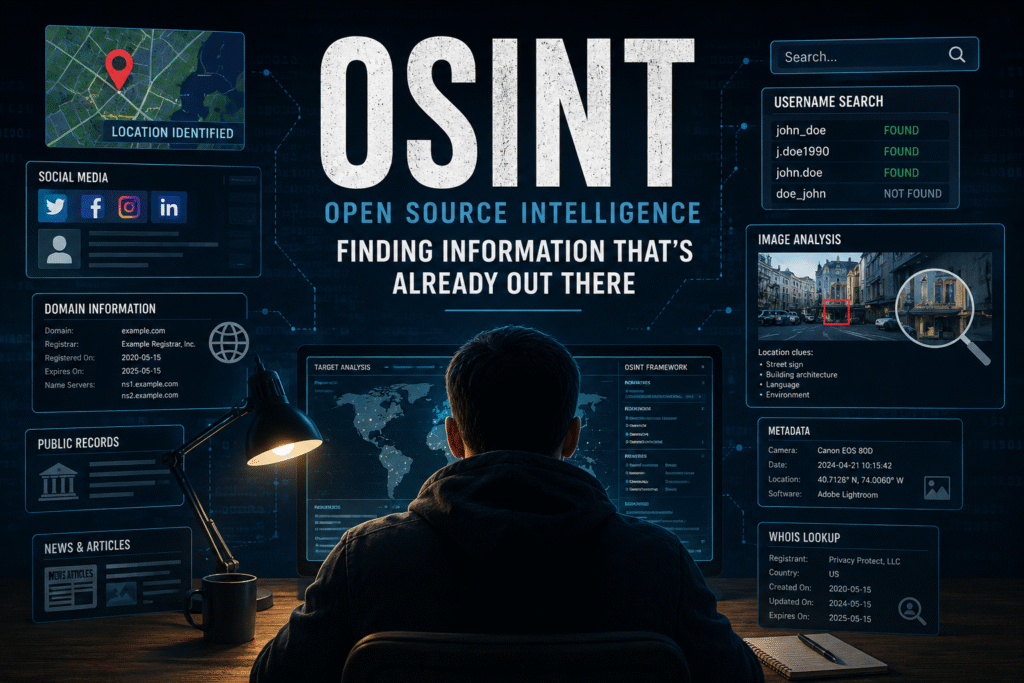
What Is OSINT? How Open Source Intelligence Helps Find Information Online

OSINT, or Open Source Intelligence, is the process of finding and analyzing information that is publicly available online. From search engines and social media to images, websites, and public databases, OSINT helps investigators connect scattered pieces of information to uncover useful insights. This article explains how OSINT works, where the information comes from, common OSINT techniques and tools, and why it is becoming an important skill in cybersecurity.

Blog, Educational

What Are Meta AI Glasses? How Smart Glasses Are Bringing AI to Your Face

Meta AI glasses are bringing artificial intelligence into everyday wearable technology. Combining cameras, microphones, speakers, wireless connectivity, and AI, these smart glasses can help users capture photos, answer questions, identify objects, and interact with their surroundings without constantly reaching for a smartphone. This article explains how Meta AI glasses work, how they use computer vision and voice AI, and what the future could look like for AI-powered wearables.

Educational

What Are E-Ink Color Displays? How Digital Price Tags and Color-Changing Cars Work

E-Ink displays are changing the way we think about digital screens. From Kindle e-readers and smart supermarket price tags to BMW’s experimental color-changing cars, electronic ink can display information while using very little power. This article explains how E-Ink technology works, how microscopic particles create images and colors, why these displays don’t need constant power, and how color E-Ink displays could become part of everyday technology in the future.

Educational

What Is LEO Satellite Internet? How Starlink and JioSpaceFiber Bring Internet From Space

LEO satellite internet is changing the way people connect to the internet, especially in remote areas where traditional fiber cables and mobile towers are difficult to deploy. Technologies used by companies like Starlink rely on satellites orbiting much closer to Earth, helping reduce latency and provide high-speed connectivity. This article explains how LEO satellites work, how Starlink uses phased-array antennas, how satellite internet compares with traditional systems, and how JioSpaceFiber is working toward satellite-based connectivity in India

Educational

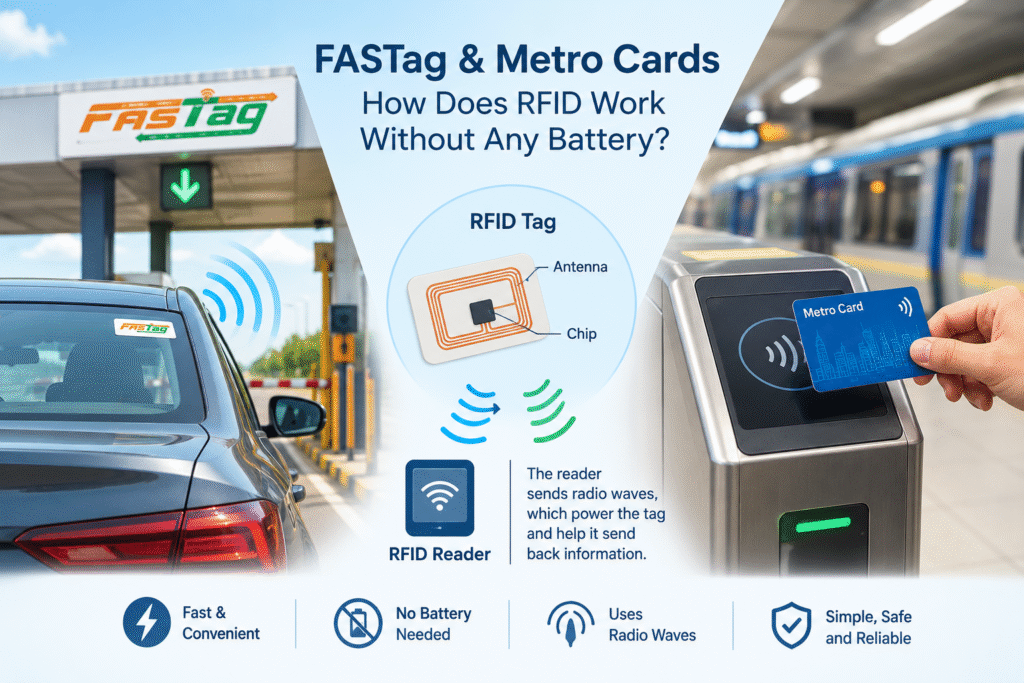
FASTag & Metro Cards: How Does RFID Work Without Any Battery?

RFID (Radio Frequency Identification) allows devices like FASTags and metro cards to function without batteries by using passive technology. Here is a summary of how it works:
Power Source: Instead of having an internal battery, passive RFID tags harvest energy from the electromagnetic field generated by a reader. When the tag is in range, it converts this radio-frequency energy into the electrical power needed to activate its internal chip.
Communication: The tag communicates back to the reader using “backscatter” technology. It modifies its antenna’s

Educational

What Is Edge AI?

Edge AI brings artificial intelligence closer to where data is created by processing information directly on devices instead of relying entirely on cloud servers. From smartphones and smart cameras to healthcare devices, autonomous vehicles, and factories, Edge AI enables faster responses, reduces internet dependency, saves bandwidth, and can improve privacy. This article explains how Edge AI works, its key benefits, real-world applications, challenges, and why it could play an important role in the future of AI.

Educational

What Is Augmented Reality?

Augmented Reality (AR) is a technology that bridges the gap between the physical and digital worlds by overlaying digital information, objects, or effects onto the real environment. Unlike Virtual Reality, which fully immerses users in a simulated space, AR maintains visibility of the physical world, allowing digital content to appear integrated with a user’s surroundings.

Powered by cameras, sensors, and software that interpret environmental data, AR is increasingly used across fields such as gaming, shopping, education, healthcare, and engineering. While currently common on smartphones through apps and social media filters, the technology is evolving toward more natural, immersive applications such as smart glasses that aim to make digital information a seamless, contextual part of our daily interactions.

Scroll to Top